

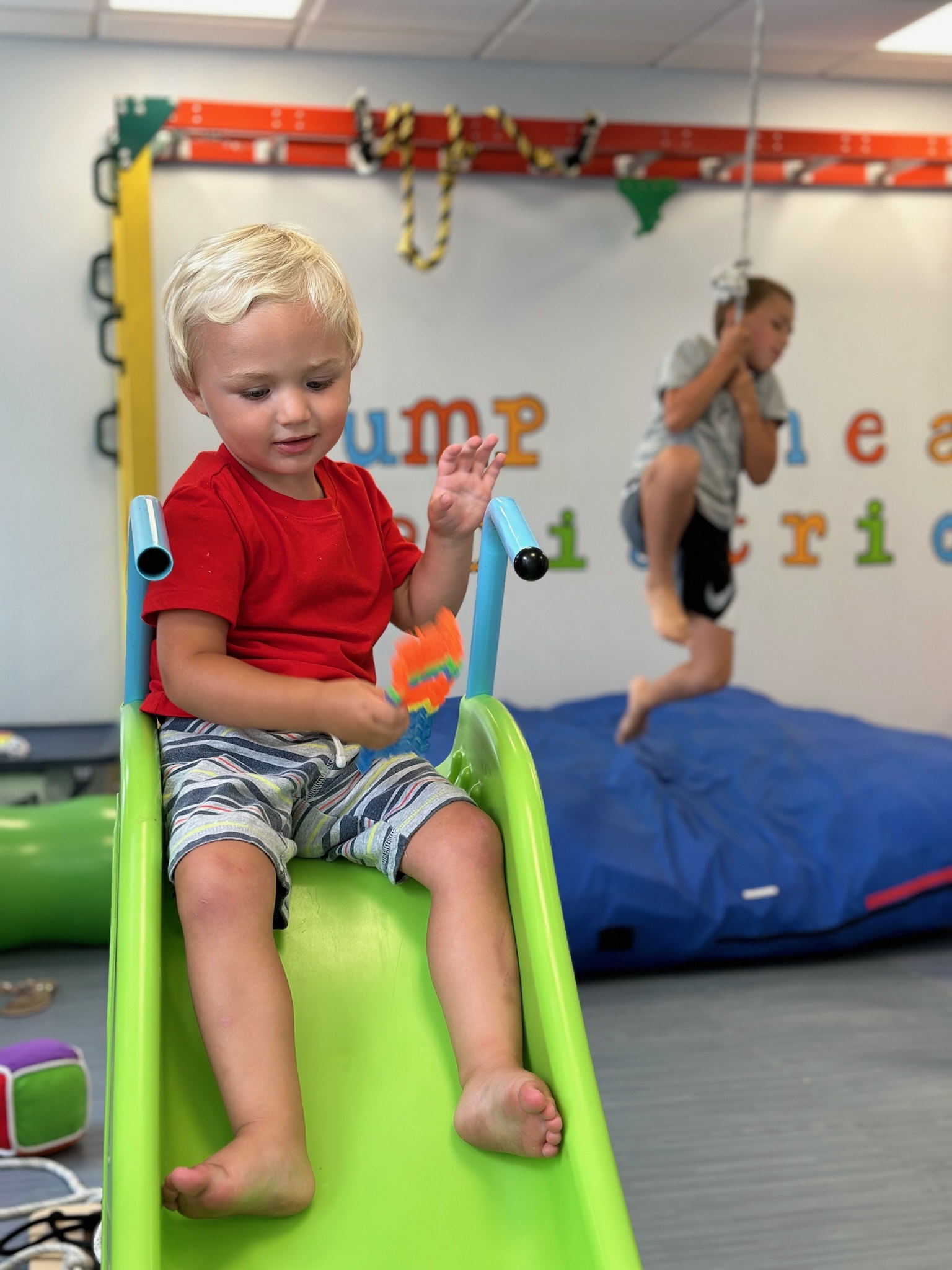
Some of the most effective learning does not look like learning at all. Ask an occupational therapist, and they will tell you that progress often happens when kids are laughing, moving, and fully engaged in play. Games are a powerful tool in occupational therapy because they build essential skills while keeping children motivated and relaxed.
This is learning without noticing!
Why games work so well in occupational therapy
Games naturally combine movement, thinking, and social interaction. They allow therapists to target multiple skill areas at once while keeping sessions fun and student centered.
Through play, occupational therapists can support:
- Fine motor development
- Hand-eye coordination
- Attention and impulse control
- Sensory regulation
- Problem solving and planning
- Social interaction and turn taking
When children are focused on the game, they are more willing to practice challenging skills.
Classic OT favorites and what they build
Many familiar games double as therapy tools. Occupational therapists often choose games that can be easily adapted for different skill levels and settings.
Jenga
Builds fine motor control, graded force, and focus. It also encourages patience and problem solving.
Connect Four
Supports visual scanning, hand strength, and strategic thinking while keeping turns quick and engaging.
Uno
Targets hand dexterity, color and number recognition, and cognitive flexibility, especially when rules change.
Memory or matching games
Strengthen visual memory, attention, and scanning skills while keeping demands low pressure.
Operation
Challenges hand stability, precision, and self regulation in a way kids find exciting rather than frustrating.
Movement based games kids love
For students who need to move, OTs often incorporate games that get bodies involved while still building control.
Simon Says
Works on motor planning, listening skills, and impulse control.
Obstacle courses
Support balance, coordination, strength, and sequencing. They can be easily customized for classroom or therapy spaces.
Ball games
Build bilateral coordination, timing, and visual tracking, and can be adapted for individual or group play.
Sensory friendly play
Games can also help students regulate their sensory systems and prepare for learning.
Play dough or putty games
Strengthen hands while providing calming sensory input.
Board games with textured pieces
Offer tactile input while maintaining structure and routine.
Calm turn taking games
Help students practice regulation, waiting, and transitions in a predictable way.
Learning hidden in plain sight
The magic of play based therapy is that children are practicing skills without the pressure of “doing therapy.” They are simply playing a game, trying to win, or having fun with peers.
Occupational therapists intentionally select and modify games so students can experience success while building independence and confidence. Progress feels natural, not forced.
Occupational therapists know that learning sticks best when kids are engaged and enjoying themselves. Games make therapy approachable, effective, and fun while quietly building the skills students need for school and daily life.
Sometimes the best learning happens when kids do not even realize they are learning at all!