

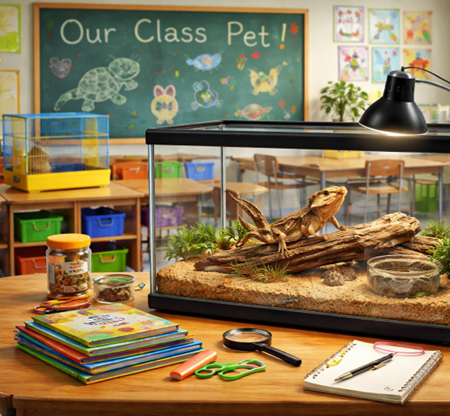
Classroom pets aren’t just cute, they can have a meaningful impact on student learning, responsibility, and emotional development. From fish tanks to guinea pigs, reptiles, or even small birds, a well-chosen classroom pet can become a beloved member of the school community. Beyond the joy of having a living companion in the classroom, pets provide hands-on opportunities for learning, social-emotional growth, and inclusivity for students of all abilities.
The Benefits of Having a Classroom Pet
Responsibility and Routine
Students quickly learn that pets depend on consistent care. Daily or weekly tasks, feeding, watering, cleaning cages or tanks, and monitoring the pet’s health, teach routines and accountability. These tasks also encourage teamwork, as students take turns caring for the pet and tracking responsibilities. Over time, students often develop pride in their contributions, which can boost self-esteem and encourage independence.
Social-Emotional Development
Pets have a unique way of helping students regulate emotions. For children who feel anxious, frustrated, or overstimulated, having a calm, predictable animal nearby can provide comfort. Interacting with a pet teaches empathy, patience, and nurturing skills, as students learn to recognize and respond to the pet’s needs. For students with behavioral challenges, structured interaction with a pet can be a positive reinforcement tool, offering motivation and engagement in the classroom.
Science and Learning Opportunities
Classroom pets offer a natural bridge to science, math, and observation skills. Students can watch life cycles unfold, learn about habitats, and track growth or feeding patterns. Keeping a log of a pet’s behavior or growth can reinforce measurement, observation, and data collection skills, connecting real-life experiences to academic lessons. Additionally, pets often spark curiosity and inquiry-based learning, as students ask questions, make predictions, and problem-solve in caring for their classroom companion.
Inclusive Social Interaction
Classroom pets can also foster social interaction among students. Working together to care for a pet encourages collaboration, communication, and shared responsibility. Pets can act as social catalysts, encouraging quieter or more reserved students to participate and engage with peers. For students with special needs, pets can be a non-judgmental source of companionship, helping reduce stress and promoting participation in group activities.
Considerations Before Adding a Classroom Pet
Not all pets are suitable for every classroom. Teachers should carefully consider the type of pet, space, supervision requirements, and any allergies or sensitivities among students. Low-maintenance pets, like fish or small reptiles, are often safer and easier to care for in classrooms with younger students or those with limited mobility. Clear classroom rules, posted schedules, and assigned responsibilities ensure that care is consistent, the environment remains safe, and students understand expectations.
Teachers should also plan for periods when the classroom is empty—weekends, holidays, or breaks, so pets continue to receive care. Some schools partner with families or local volunteers to make sure pets are looked after outside school hours.
Remember, the classroom pet is ultimately the teacher’s responsibility including summer break, veterinary care, and long-term housing and care. Schools do not typically help support classroom pet care or costs.
Modifications and Accessibility
To make a classroom pet experience accessible for all students:
- Peer or staff support: Students who need extra guidance can pair with a peer buddy or adult to complete pet care tasks.
- Step-by-step instructions: Visual or written instructions for feeding, cleaning, and handling help students complete tasks independently.
- Rotating responsibilities: Assigning tasks in shifts ensures no student feels overwhelmed and all students can participate.
- Sensory considerations: For students sensitive to fur or noise, consider alternative pets such as fish, reptiles, or hermit crabs.
These modifications allow every student to participate meaningfully, experience the benefits of responsibility, and engage in hands-on learning safely.
Benefits of Day Visits for Classrooms Without a Full-Time Pet
Not every classroom can support a full-time pet due to space, allergies, or staffing limitations. Day visits from animals provide many of the same benefits without the ongoing responsibilities. Short, scheduled visits allow students to interact with animals safely while learning about empathy, social skills, and responsibility. These visits can be incorporated into lessons, reading activities, or social-emotional learning exercises, giving students a memorable, hands-on experience.
Therapy programs and animal training initiatives often use these visits to provide socialization opportunities for puppies or other young animals. Students can help with simple supervised tasks, such as gentle petting, basic commands, or observing behaviors. These interactions teach students to respect animals, recognize body language, and develop patience. In addition, day visits can reduce stress and anxiety, provide a calming presence in the classroom, and offer a positive reinforcement tool for students who are learning self-regulation or social-emotional skills.
By bringing animals into the classroom on a short-term basis, schools can give students many of the benefits of pet ownership while avoiding the long-term challenges. These visits also offer opportunities for collaboration with local therapy and training programs, creating community partnerships that enrich the educational experience.