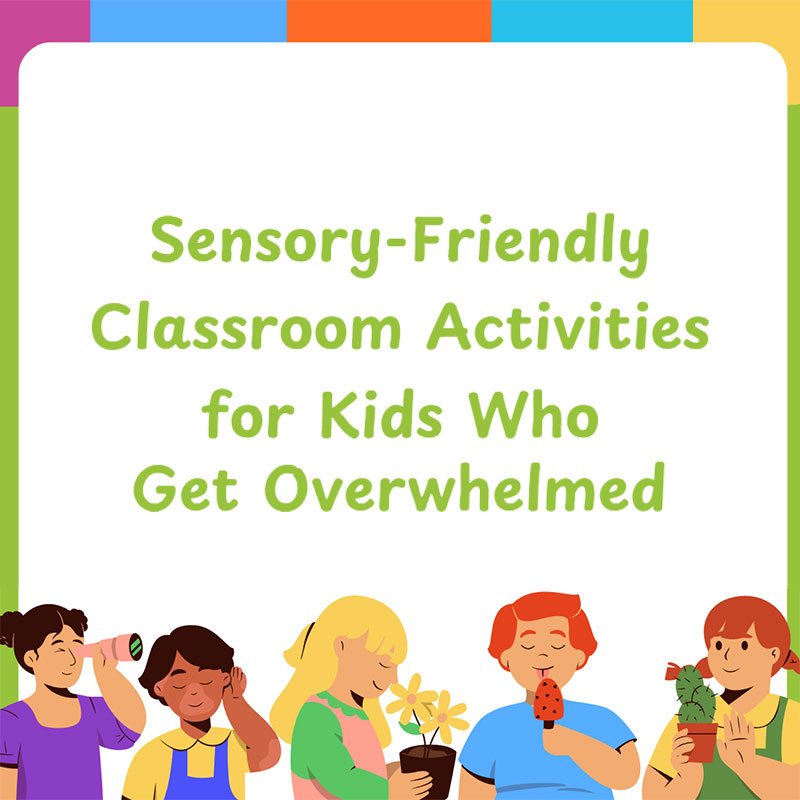
At Jump Ahead Pediatrics, our therapists don’t just talk about strategies, we bring sensory-friendly supports directly into the schools we serve. We collaborate with teachers and teams to help students feel calmer, more confident, and more available for learning throughout the day. Classrooms are busy, noisy, and full of stimulation, which can feel overwhelming for some children. For some kids, that constant buzz can tip into sensory overload, which can make it tougher to focus, manage big feelings, and jump into learning the way they want to.
What Sensory Overload Can Look Like at School
Sensory overload happens when a child’s nervous system receives more input than it can manage in the moment. At school, we may see:
- Covering ears or avoiding noisy spaces
- Big reactions during transitions (lining up, specials, assemblies)
- Difficulty sitting still or sustaining attention
- “Shut down” behavior (withdrawn, quiet, refusing work)
- Meltdowns, tears, or leaving the classroom frequently
These behaviors aren’t “bad choices”, they’re signals that a student needs support to regulate. Imagine every kid has an invisible sensory cup they carry around all day.
At the start of the day, their “sensory cup” is empty. But as the day goes on, different things pour into it.
- Bright classroom lights drip in.
- The chair scraping on the floor splashes in.
- A noisy hallway dumps in a big wave.
- Having to switch activities without a warning adds another pour.
For some kids, that cup fills up really fast.
Now here’s the important part. If the cup keeps filling and nothing helps empty it, the cup starts to overflow. And when it overflows, it can look like big emotions, shutting down, frustration, tears, or a sudden meltdown.
Sensory supports help empty the cup before it spills over. Things like a movement break, a quiet space, deep pressure, or a fidget poke a little hole in the cup so the extra sensory input can drain out.
When the cup stays at a comfortable level, kids can feel calmer, more in control, and more ready to learn.
What Jump Ahead Therapists Do in the Schools We Serve
When Jump Ahead therapists work in schools, we help students build regulation skills in the environments where they need them most: classrooms, hallways, cafeterias, recess, and specials. Our school-based support often includes:
- Observing students in real classroom routines
- Identifying sensory triggers and patterns
- Teaching regulation strategies students can use independently
- Coaching staff on what works (and what doesn’t) for each student
- Recommending tools and routines that fit the school day
The goal is practical, to help students stay regulated so they can participate, learn, and connect.
Sensory-Friendly Supports Jump Ahead Therapists Can Provide at School
1. Built-In Movement Breaks (Without Disrupting Class)
Movement is one of the fastest ways to help the nervous system reset. We help students use movement in ways that feel natural and classroom-friendly. Examples we may implement with school teams:
- Quick “heavy work” jobs (chair pushes, wall push-ups, carrying a stack of books)
- Short hallway walks with purpose (“delivery” tasks)
- Structured “brain breaks” between activities
- Desk-based stretches when leaving the room isn’t possible
We also help teachers decide when movement helps most, often before a tough transition or longer sitting time.
2. Calm Corners and Regulation Spaces That Actually Get Used
Many classrooms try a calm corner, but it works best when it’s taught, practiced, and used proactively. Jump Ahead therapists help set up and teach how to use the space (it’s not a punishment, it’s a tool), what the student should do there (breathe, squeeze a fidget, use a visual strategy), and how long to stay and how to return to learning.
3. Classroom Tools That Support Focus During Instruction
Some students do better when they have a safe way to meet sensory needs while listening and learning. Depending on student needs and school expectations, we may recommend and train staff on, quiet fidgets used appropriately, noise cancelling headphones, seat bands or foot supports, and alternative seating options (when available). The key is always function, tools should support learning, not distract from it.
4. Predictable Routines and Visual Supports for Transitions
Transitions are a major trigger for overwhelm. Jump Ahead therapists often focus on making transitions clearer and easier. Supports we may implement include:
- Visual schedules (whole-class or individual)
- “First–Then” boards
- Countdown timers and transition warnings
- Mini visual checklists for multi-step routines (morning work, packing up, centers)
When students know what’s coming next, they feel safer—and regulation improves.
Collaboration Is the Difference
One of the biggest benefits of Jump Ahead therapists being in schools is collaboration. We work alongside teachers and paraprofessionals, support staff and related service teams, and families (to align strategies between home and school). When everyone uses the same language and tools, students learn faster and progress sticks.
How Jump Ahead Pediatrics Helps Schools and Students Thrive
At Jump Ahead Pediatrics, our therapists provide school-based support that’s practical, respectful, and individualized. We help students learn regulation strategies they can use in real time so they can feel successful not just in therapy, but throughout the school day. If you’re a school team looking for additional support, we’re here to help!
Anna Pacheco
Jump Ahead Pediatrics