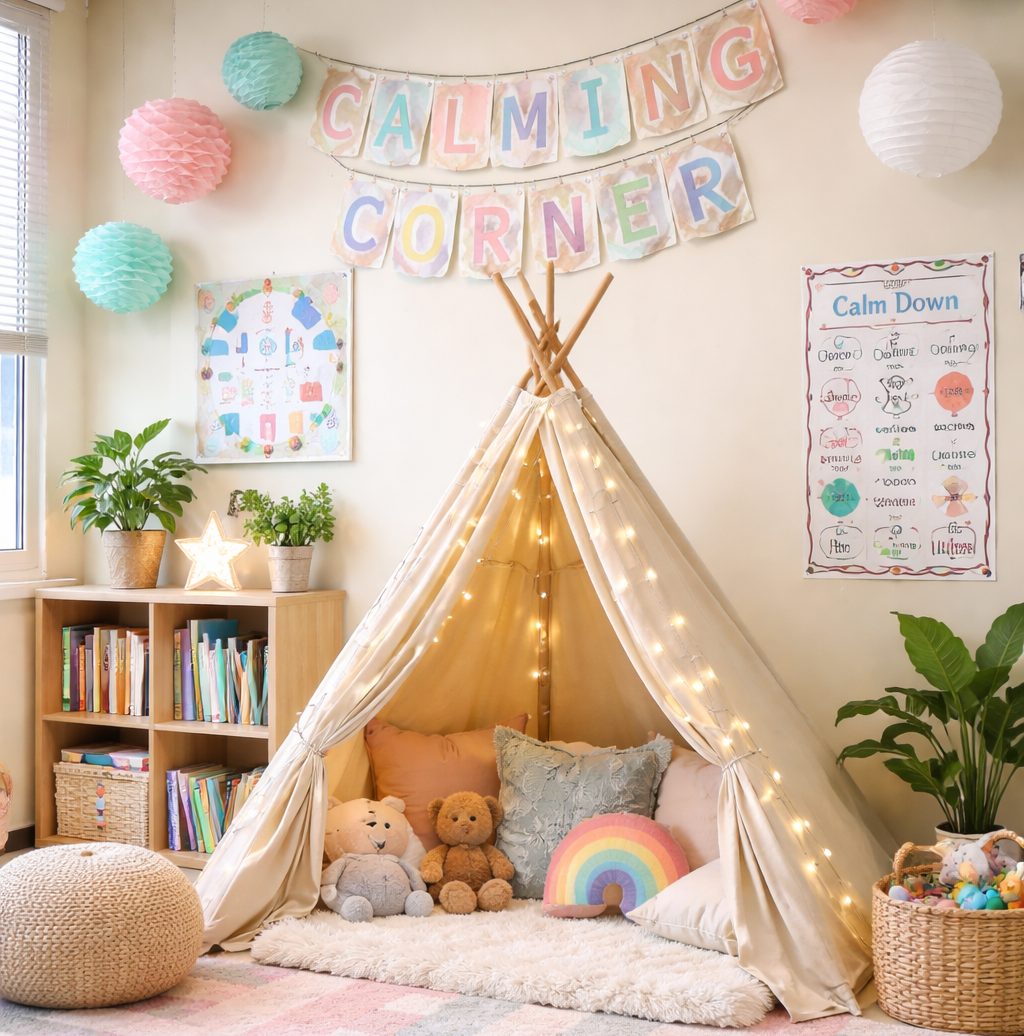
Classrooms can be busy, noisy, and sometimes overwhelming for students, especially those with sensory sensitivities, anxiety, or behavioral challenges. A calming corner is a designated space where students can step away for a moment, regulate their emotions, and return to learning ready to focus. But not all calming corners are created equal. Here are five ideas that are both practical and effective, along with the benefits each strategy provides.
1. Soft Seating and Cozy Spaces
A calming corner should feel inviting and separate from the busy classroom environment. Soft seating options like beanbag chairs, floor pillows, small tents, or cozy nooks give students a place to physically relax. The benefit of this type of setup is that it signals safety and comfort. When a student feels physically supported, their body has a chance to calm down, which can reduce stress and help regulate emotions. Cozy spaces also give students a sense of ownership and control over their environment, which is critical for building self-regulation skills.
2. Sensory Tools That Help Students Focus
Sensory tools give students a way to self-regulate when emotions start to feel overwhelming. Stress balls, fidget toys, weighted lap pads, or textured mats provide tactile input that helps children stay grounded and redirect excess energy. The benefits of sensory tools go beyond immediate calm; consistent use can improve focus, increase attention spans, and teach students how to independently manage sensory needs. Rotating or offering multiple options allows students to find what works best for them, which encourages problem-solving and self-awareness.
3. Visual Supports and Emotion Charts
Visual supports help students understand expectations and communicate their feelings without relying solely on words. Emotion charts, visual steps for calming strategies, and visual timers give students clear, structured ways to express themselves and follow routines. The benefit is twofold: students feel heard and understood, and teachers have a consistent method to support regulation. Over time, visual tools also teach students to recognize early signs of distress and implement coping strategies independently, building long-term self-regulation skills.
4. Quiet Audio Options
Soft background music, nature sounds, or guided relaxation audio can create a calming atmosphere and mask distracting classroom noise. Using headphones for personal audio can help students focus solely on regulating themselves. The benefits include reducing stress, lowering physiological arousal (like heart rate or tension), and improving attention. Audio options can also create consistency for students who thrive with predictable sensory input, making the calming corner a reliable tool for emotional support.
5. Engaging, Low-Stress Activities
Including simple, low-pressure activities like puzzles, coloring pages, tactile play, or mindfulness cards provides students with a constructive way to redirect attention and calm their minds. The benefits are immediate and long-term: students practice patience, develop fine motor skills, improve focus, and learn mindfulness techniques. These activities also encourage independence, giving students a sense of agency over how they manage emotions and transitions.
When calming corners are thoughtfully designed and consistently used, they become powerful tools for supporting student regulation, but they work best with the right guidance and follow-through. Jump Ahead behavior staff can help schools implement calming corners effectively by teaching students how to use the space appropriately, modeling regulation strategies, and reinforcing skills throughout the day. By pairing these calming corner ideas with individualized behavioral support, Jump Ahead staff help students build lasting self-regulation skills, reduce classroom disruptions, and return to learning feeling confident, supported, and ready to succeed.